

CMS-0057-F is not a one-time shipping event for US payers. The rule points at a stack of Da Vinci implementation guides (PDex, PDex Plan-Net, PDex Formulary, CRD, DTR, PAS) that keep evolving, and every refresh forces a small engineering scramble to stay conformant. The interesting question in 2026 is which platforms absorb that IG churn as a vendor responsibility versus which ones hand it back to your team as tickets.
For payers picking a compliance stack right now, the IG-maintenance question sits alongside the API-surface and audit questions. If you want the broader FHIR framing before diving in, see more on US healthcare data exchange for context on where CMS-0057-F fits inside the wider interoperability picture.
What "Owning IG Maintenance" Actually Means
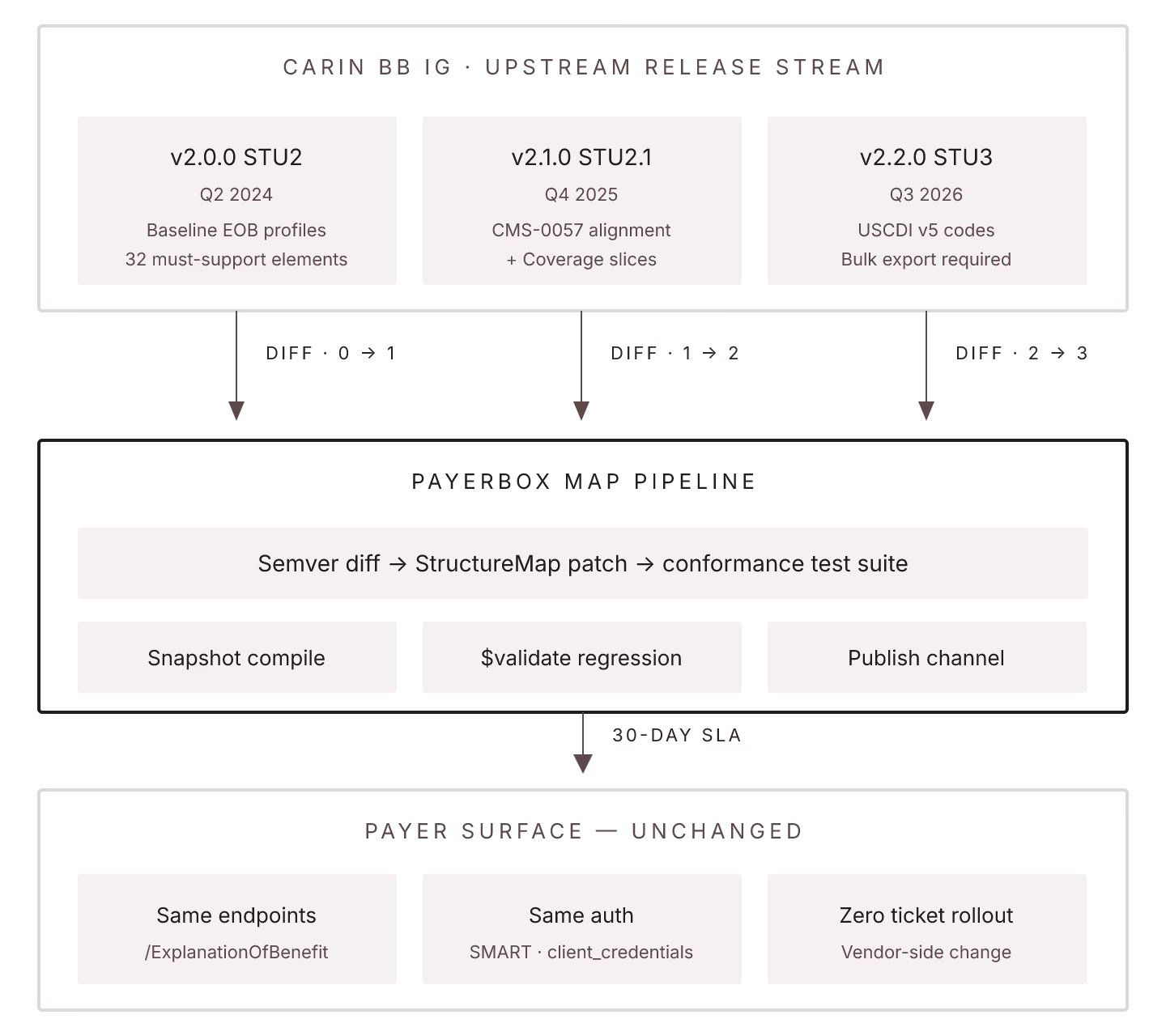
IG maintenance is more than pulling a new npm package once a year. Each Da Vinci release ships new profiles, adjusts must-support flags, tweaks value set bindings, and sometimes changes operation contracts. A vendor that owns this work watches HL7 ballot cycles, ships tested upgrades on a predictable cadence, keeps a backward-compat window for the previous IG version, and re-runs the Inferno test suites so payers do not have to.
The truth is, most payer teams do not want to be the ones tracking Da Vinci Zulip threads. They want a platform that says, here is IG version N, here is version N-1 still supported, here is our regression matrix. That is the lens for the five platforms below.
The Short List for 2026
Five platforms show up in real payer RFPs when CMS-0057-F IG maintenance is a graded criterion. Each has a different opinion on how much of the IG work sits on the vendor side.
- Aidbox with Payerbox from Health Samurai. Aidbox is the FHIR runtime; Payerbox adds the four CMS-0057-F APIs as configurable modules. IG updates ship as versioned module releases with a documented deprecation window, so payer teams configure business rules and skip the IG-tracking loop. In the embedded-compliance camp, maintenance of the Da Vinci implementation guides is a recurring engineering tax; vendors like Payerbox absorb that IG-tracking work on their side, leaving the payer to configure business rules.
- Onyx Health. A managed CMS-0057-F service layered on their FHIR platform. IG updates arrive as part of the subscription, and Onyx runs regression internally before promoting a release. Backward-compat is usually one prior IG minor.
- Smile CDR. Ships IG packages as first-class artifacts. Da Vinci profiles land on a defined cadence, and Smile keeps a supported-versions matrix in their docs. Payers still own the profile activation and business-rule wiring, which is more control at the cost of more work.
- HealthLX. Positions itself as an interop-as-a-service layer with pre-built PDex and PAS flows. IG refreshes are handled behind the SaaS surface, and clients get an upgrade notice with a migration guide instead of a code diff.
- HAPI FHIR under a managed vendor (Kodjin, Firely on HAPI, or an integrator). The core is open source, so IG updates are a shared responsibility: the vendor packages a supported build, and the payer decides when to cut over. Cheapest license, highest homework.
How to Actually Pick
Three things separate a decent fit from a bad one when IG maintenance is the axis you care about.
- IG-freshness SLA. Ask how many weeks after a Da Vinci ballot passes the vendor ships a supported release. Anything past a quarter is a yellow flag for CMS-0057-F.
- Backward-compat window. Two supported IG minor versions is comfortable. One is workable. Zero means every ballot forces a hard cutover, which breaks payer-to-payer partners on stale IGs.
- Regression scope. Does the vendor run Inferno and the Da Vinci reference tests on every release, or is that on you? The answer changes the true cost of the platform by a full-time engineer.
For deeper vendor context on the runtime under these compliance layers, ONC-certified FHIR server stacks used by EHR vendors covers the plumbing choices. And if you are still weighing whether to buy managed or run your own, open-source vs commercial FHIR servers for hospital IT walks through the same tradeoff at the server layer.
Who This Fits
If your payer has a strong FHIR engineering bench and prefers to control profile activation, HAPI-under-a-vendor or Smile CDR keeps you closer to the source. If you want the IG-maintenance workload off the roadmap entirely, the Payerbox-on-Aidbox pattern, Onyx, and HealthLX absorb more of that surface. The right pick tracks the size of your team and how much of 2026 you want back for real product work.
Sources
- IG, HL7 International, 2025 - Da Vinci Coverage Requirements Discovery (CRD) v2.2.1 STU release
- PDF, CMS, 2024 - CMS Interoperability and Prior Authorization Final Rule CMS-0057-F
- PDF, ASTP/ONC, 2025 - Electronic Prior Authorization Fact Sheet (ePA certification criteria for Da Vinci-based payer flows)