How is technology changing the face of medicine? In the United States, digital healthcare is rapidly evolving, driven by the need for better, more efficient, and more accessible patient care. At the heart of this transformation lies the Fast Healthcare Interoperability Resources, or FHIR data model. This standard promises to unlock a new era of seamless data exchange and improved health outcomes.
Understanding the FHIR Data Model
What exactly is the FHIR data model, and why is it such a game-changer? Simply put, FHIR offers a standardized way for healthcare systems to exchange information. Think of it as a universal language that allows different electronic health record (EHR) systems, mobile apps, and other healthcare technologies to communicate effectively. Instead of struggling with incompatible data formats, providers can now share patient information securely and efficiently, regardless of the technology they use.
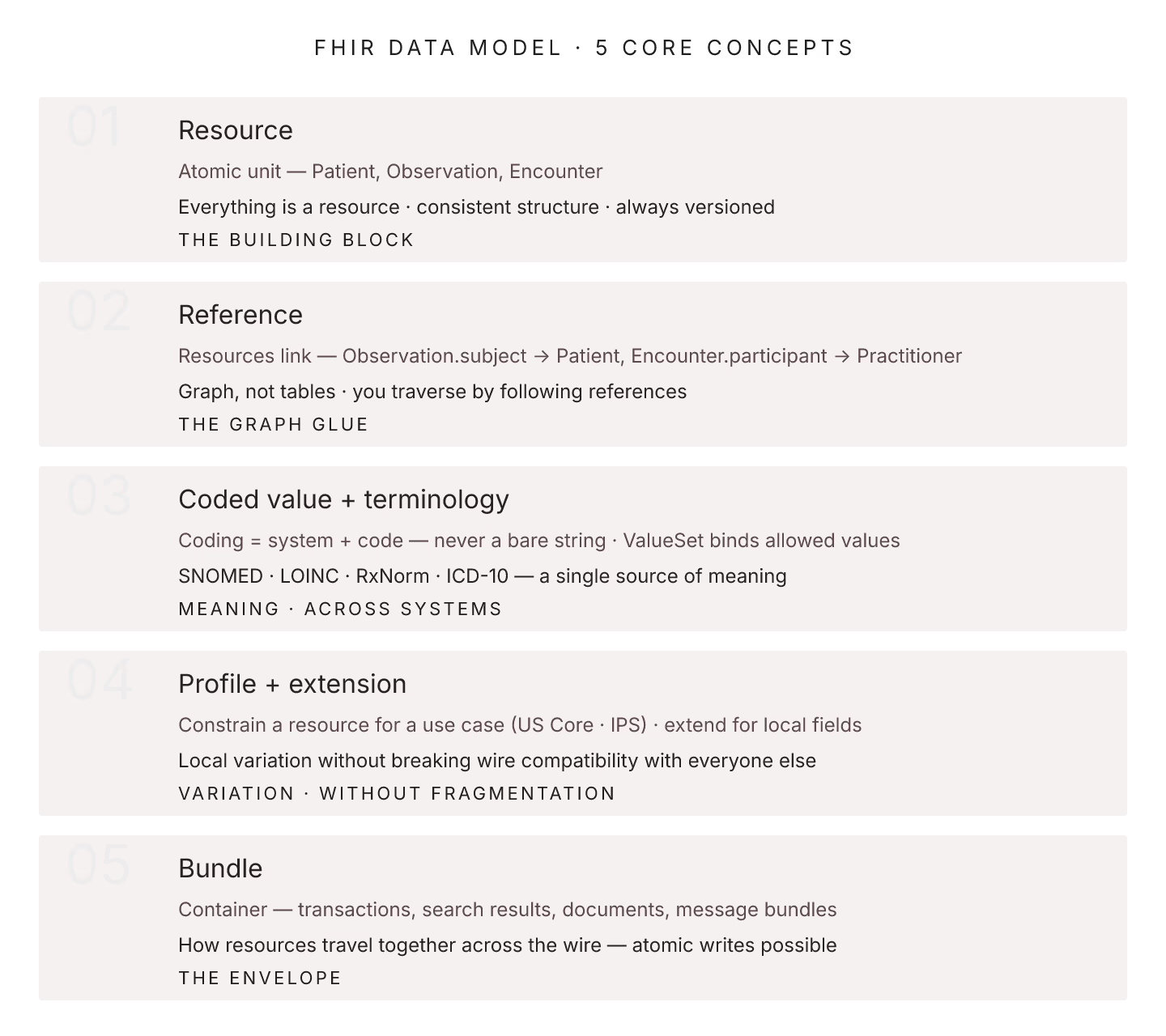
FHIR’s architecture is based on modular components called “resources.” Each resource represents a specific piece of healthcare information, such as a patient, a medication, or a lab result. These resources are designed to be easily accessible and adaptable, making it easier for developers to create innovative healthcare applications. Imagine a world where your doctor can instantly access your complete medical history from any hospital or clinic you’ve visited. That’s the promise of FHIR.
The Impact on Patient Care
How does the adoption of the FHIR data model directly affect patients? The answer is multifaceted. First, it improves care coordination. When healthcare providers have a complete and accurate picture of a patient’s medical history, they can make better-informed decisions, reducing the risk of errors and improving treatment outcomes.
Second, FHIR empowers patients to take control of their health data. With FHIR-enabled apps, patients can access their medical records, track their progress, and share information with their care team. This level of engagement can lead to better self-management of chronic conditions and improved overall health.
Third, FHIR fosters innovation in healthcare. By providing a standardized platform for data exchange, FHIR encourages the development of new and exciting healthcare technologies. Telemedicine, remote patient monitoring, and personalized medicine are just a few examples of the innovations being fueled by FHIR.
Overcoming the Challenges
While the benefits of FHIR are clear, its implementation is not without its challenges. One of the biggest hurdles is interoperability. Even with FHIR, achieving true interoperability requires overcoming technical, semantic, and organizational barriers. Different healthcare systems may interpret FHIR standards differently, leading to inconsistencies in data exchange.
Another challenge is security and privacy. As healthcare data becomes more interconnected, it also becomes more vulnerable to cyberattacks. Protecting patient information requires robust security measures and strict adherence to privacy regulations like HIPAA.
Finally, widespread adoption of FHIR requires a collaborative effort from all stakeholders, including healthcare providers, technology vendors, policymakers, and patients. Education, training, and incentives are needed to encourage the adoption of FHIR and ensure that it is used effectively.
The Future of Digital Healthcare in the USA
Despite the challenges, the future of digital healthcare in the USA looks bright, thanks in part to the growing adoption of FHIR data models. As more healthcare systems embrace FHIR, we can expect to see even greater improvements in patient care, efficiency, and innovation. The journey toward a truly interconnected healthcare system is ongoing, but FHIR is paving the way for a future where healthcare is more accessible, affordable, and patient-centered.
What does this future look like? Imagine wearable devices seamlessly transmitting your vital signs to your doctor, AI algorithms analyzing your medical data to identify potential health risks, and personalized treatment plans being tailored to your unique genetic makeup. This is not science fiction; it’s the promise of digital healthcare powered by FHIR. The FHIR resources are the building blocks of this revolution.
