
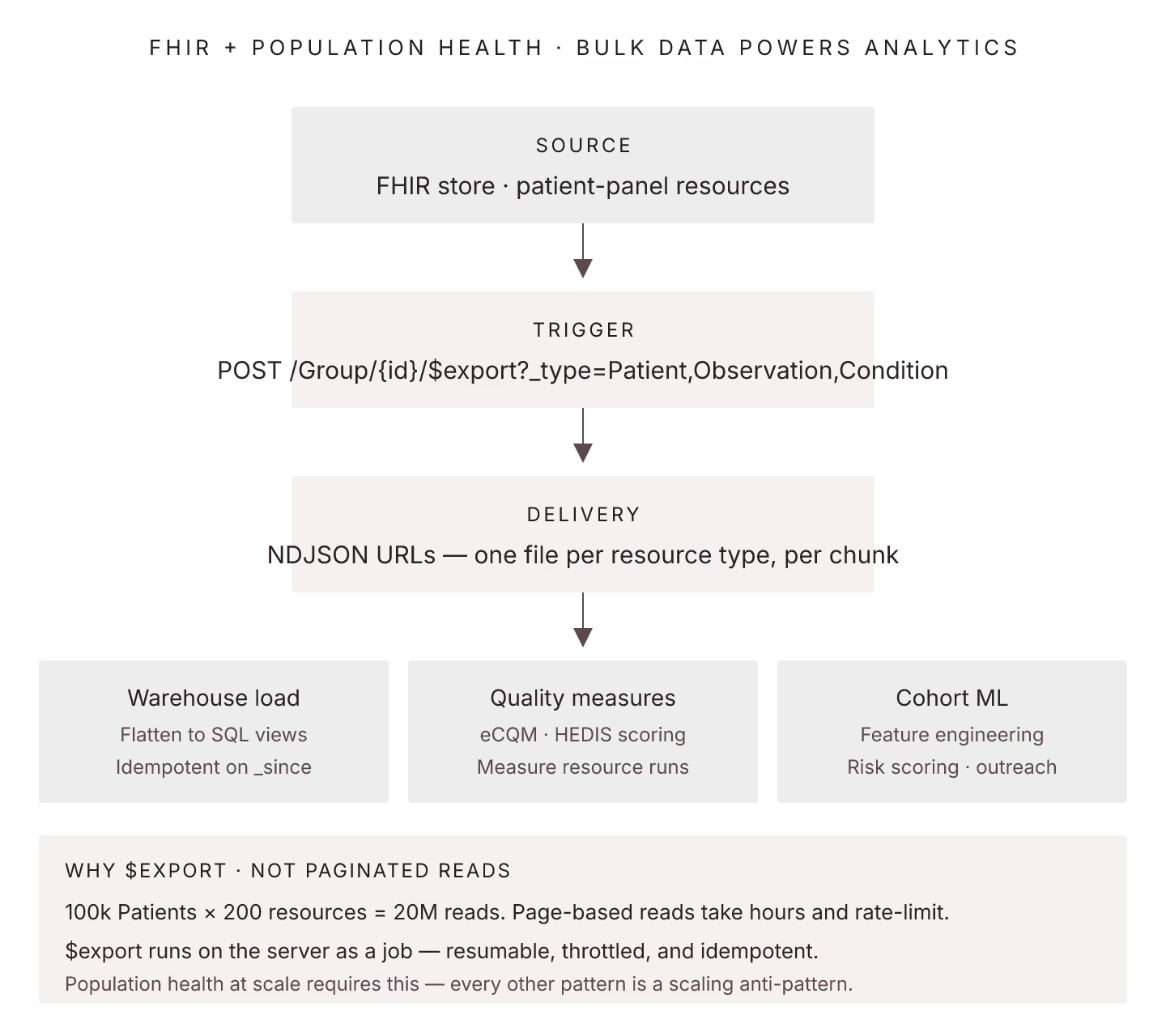
Digital healthcare is rapidly evolving in the United States, spurred by technological advancements and a growing need for efficient, accessible, and personalized care. One of the most promising tools in this transformation is FHIR, a standard that promises to revolutionize how healthcare data is shared and used. But how can we truly harness its power, particularly when it comes to FHIR population health?
Understanding FHIR and Its Significance
FHIR, or Fast Healthcare Interoperability Resources, is a next-generation standards framework created by HL7. Think of it as a universal language for healthcare data. Unlike older, more cumbersome standards, FHIR is built on modern web technologies, making it easier for different systems to communicate with each other. This interoperability is crucial for several reasons. First, it allows doctors, hospitals, and other healthcare providers to seamlessly exchange patient information. Second, it empowers patients to access their own health records and share them with whomever they choose. Finally, and perhaps most importantly, it lays the foundation for advanced analytics and data-driven insights that can improve the quality and efficiency of care.
Why is this all so important? Imagine a scenario where a patient sees multiple specialists, each using a different electronic health record (EHR) system. Without interoperability, these systems can’t “talk” to each other. This can lead to fragmented care, duplicated tests, and even medical errors. FHIR aims to solve this problem by providing a common standard for data exchange.
The Challenge of Population Health Management
Population health management focuses on improving the health outcomes of a group of individuals. This could be a specific demographic, a community, or even an entire state. Effective population health management requires access to vast amounts of data from a variety of sources, including EHRs, claims data, and social determinants of health. However, collecting and analyzing this data can be a major challenge due to the lack of interoperability between systems. The ability to manage populations efficiently is a critical component of modern healthcare.
How do healthcare organizations currently address this challenge? Often, they rely on manual data aggregation and analysis, which is time-consuming, expensive, and prone to errors. This is where FHIR comes in.
FHIR’s Role in Advancing Population Health
FHIR can significantly enhance population health initiatives by enabling seamless data exchange and integration. It allows healthcare organizations to,
- Aggregate data from multiple sources, FHIR provides a standardized way to collect data from different EHRs, claims systems, and other relevant sources. This eliminates the need for manual data entry and reduces the risk of errors.
- Identify at-risk populations, By analyzing aggregated data, healthcare organizations can identify individuals who are at high risk for certain conditions. This allows them to proactively intervene and provide targeted care.
- Track outcomes and measure impact, FHIR enables healthcare organizations to track the outcomes of their population health initiatives and measure their impact on patient health. This information can be used to refine strategies and improve the effectiveness of programs.
- Improve care coordination, FHIR facilitates better communication and collaboration between healthcare providers. This can lead to more coordinated care and improved patient outcomes.
FHIR’s standardized format allows for the creation of applications and tools that can analyze patient data and identify trends relevant to population health. For example, an application could use FHIR to identify patients with diabetes who are not adequately managing their blood sugar levels. This information could then be used to target these patients with educational resources and support services.
Optimizing FHIR for Population Health, Key Considerations
While FHIR holds immense promise, realizing its full potential for population health requires careful planning and execution. Here are some key considerations,
- Data governance, Establish clear data governance policies to ensure data quality, security, and privacy. This includes defining data ownership, access controls, and data retention policies.
- Standardization, Adhere to FHIR standards and best practices to ensure interoperability. This includes using standardized terminologies and coding systems.
- Scalability, Design FHIR implementations to be scalable to accommodate growing data volumes and user demands. This may involve using cloud-based infrastructure and distributed data processing techniques.
- Security, Implement robust security measures to protect patient data from unauthorized access and breaches. This includes using encryption, access controls, and audit trails.
- Usability, Design FHIR-based applications and tools to be user-friendly and intuitive. This includes providing clear instructions, helpful visualizations, and easy-to-use interfaces.
How can you ensure that your FHIR implementation is truly optimized for population health? Consider these questions,
- Are you collecting the right data to support your population health goals?
- Are you using standardized terminologies and coding systems?
- Are your data governance policies in place to protect patient privacy and security?
- Are you providing adequate training and support to your users?
The Future of Digital Healthcare with FHIR
FHIR is not just a technology; it’s a catalyst for change in the healthcare industry. As FHIR adoption continues to grow, we can expect to see even more innovative applications and tools emerge that leverage its power to improve patient care and outcomes. The move toward FHIR population health represents a significant advance.
In the future, FHIR could even enable patients to have greater control over their own health data. Imagine a world where patients can easily share their health records with researchers, participate in clinical trials, and contribute to the development of new treatments. This would truly empower patients to become active partners in their own healthcare.
By embracing FHIR and optimizing its use for population health, we can create a more efficient, accessible, and patient-centered healthcare system for all. The journey is not without its challenges, but the potential rewards are immense. The transformation of digital healthcare in the USA hinges on our ability to fully realize the promise of FHIR.
