
IoT and medical device data flowing into FHIR-based EHRs uses specific patterns. Understanding the flow prevents integration surprises.
FHIR resources for device data
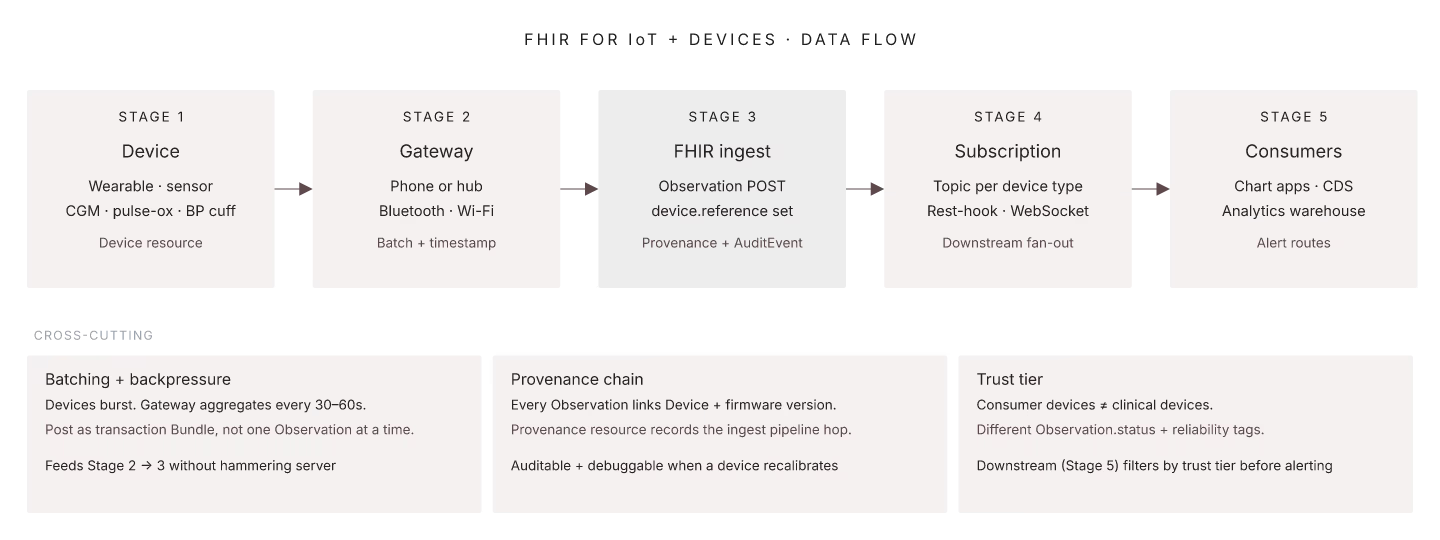
1. **Device — Physical device metadata. 2. DeviceMetric — Measurement type of a device. 3. Observation — Measurement results. 4. DeviceUseStatement** — Patient's use of a device.
Integration flow
1. Device generates data → vendor cloud. 2. Vendor cloud → integration platform. 3. Platform converts to FHIR (Observation with Device reference). 4. FHIR resources land in EHR store. 5. Clinical dashboards read via FHIR REST.
Volume characteristics
| Device | Data volume/patient/day |
|---|---|
| Blood pressure monitor | 2-4 Observations |
| Continuous glucose monitor | 288 Observations |
| Wearable step counter | 1-2 aggregated |
| Heart rate monitor | 1-10 |
| Sleep tracker | 1 per night |
Common integration challenges
1. High-volume Observations (CGM at 288/day). 2. Terminology binding standardization. 3. Reference to Patient identity. 4. Time-series indexing. 5. Alert thresholds.
Storage optimization
1. Batch write via Bundle transactions. 2. Aggregate low-priority Observations. 3. Time-series index tuning. 4. Time-series storage for high volumes.
Vendor state (mid-2026)
| Platform | Device integration | Volume support |
|---|---|---|
| Redox | Full | Moderate |
| Xealth | Full | Moderate |
| Vivify Health | Native | High |
| Custom on Aidbox | Full | High |
Regulatory considerations
1. Device compliance (FDA SaMD). 2. Patient consent for continuous monitoring. 3. HIPAA for device vendors. 4. Reimbursement codes (RPM CPT).
FHIR for IoT and devices is a growing pattern. The flow works; volume and quality management is where engineering effort concentrates.